

Bike Tire Types and Sizes
10/28/26
Bike tires come in a variety of types and sizes; the good news is that there is so much crossover in the world of unicycle and bike tires, we have more than enough experience to pass that information along to you.
Yes, this might be Unicycle.com, but here’s what you should know about bike tire types and sizes.
ISO Number
First, let’s take a look at a term you’re bound to come across sooner or later if you’re a cyclist: ISO number (for International Standards Organization), which tells the diameter of the tire at the tire bead (the inner edge) in millimeters. The ISO number is a standard that you can use to identify your tire size.
700C
All told, 700C bike tires are probably the most common standard and are frequently found on road bikes. They are available in both narrow and wider widths for use on paved surfaces as well as on gravel, dirt or sand.
650B
Bikes with 650B tires have the same inner diameter as 27.5 inch tires, and these tires are generally used on bikes that will be used for off-road applications, on gravel, sand or other unfinished surfaces.
26 Inch
While they were once more common, 26 inch tires used to be somewhat of a standard on adult bikes. That said, they are more rare nowadays than they once were, and bikes with 27.5 and 29 inch tires are now more common. Sometimes bikes for kids or teens are still made with 26 inch tires.
27.5 Inch
This is the most common bike tire size nowadays for mountain bikes because the 27.5 inch tire size is more nimble and more maneuverable than a 29 inch tire, which makes it better on a trail where agility is considered more of an asset than speed. That said, the 27.5 is not considerably slower than the 29, which means the compromise is minimal.
29 Inch
Bikes with 29 inch tires are also commonly used as mountain bikes. This tire size is faster than the 27.5 inch tire, and it also offers a smoother ride with slightly better rollover capability. That said, some riders may find it a little harder to control a mountain bike with 29 inch tires than one with 27.5 inch tires.
Determining Tire Size
If you need new bike tires and are not sure what size tires your bike has, here’s the good news. You can probably figure it out just by looking at the tire sidewall. Most bike tire sidewalls are stamped with the ISO number or tire size. For reference, if the tire diameter and size are not stamped, but the ISO number is, here’s how to make the conversion:
- ISO 622: 29 inch tires or 700C
- ISO 584: 27.5 inch tires or 650B
- ISO 559: 26 inch tires
Street Bike Tires (Road Tires)
Road bike tires are smoother and have relatively minimal tread, which offers very little rolling resistance, offering a smoother ride over finished surfaces like blacktop or concrete.
Gravel Tires
Gravel tires have slightly deeper treads than road tires, and sometimes look like they are studded with rubber. This offers slightly better traction on looser surfaces, like gravel, hence the name.
Mountain Bike Tires
Mountain bike tires have much more aggressive treads than road or gravel tires; the deep lugs of mountain bike treads provide better traction on stone, sand, mud, dirt, leaves, and other loose earth over which smoother tires would struggle to generate purchase. Some mountain bike tires are also tubeless, making them less prone to punctures and enabling riders to ride at lower tire pressures, which creates a larger contact patch and better traction.
Fat Bike Tires
Fat bike tires, ranging from 3.7 to 5.5 inches but most commonly around 4 inches, are heavier, slower, and less maneuverable than lighter tires, but they offer the greatest traction on snow, sand, and other loose earth.
The Impact of Bike Tire Width
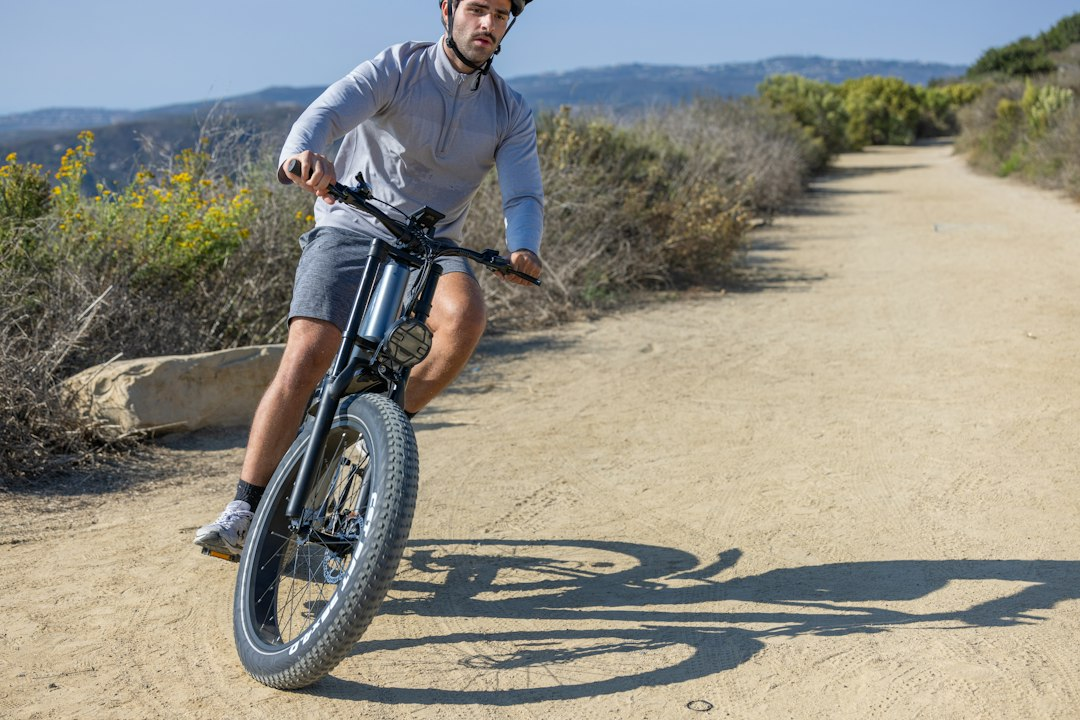
While bike tire size and tread pattern will determine in part how a bike handles, the tire width is also something you should consider. As a general rule, a thinner tire will produce a smaller contact patch and less rolling resistance, making it more suitable for use on harder surfaces like blacktop. Wider bike tires are heavier and create more rolling resistance but they also offer much better traction on loose surfaces, making them better on mud, sand or snow.
Shop Bike Tires, Inner Tubes, and More Here
Looking for a new bike tire to replace a flat, or are you just interested in a different tread pattern that you think will handle better on the road or trail? Check out what we offer here and if you have any questions about tire size, compatibility, or anything else, get in touch with us and we will be more than happy to help.