
Basic Bike Tire Maintenance
05/20/26
Whether you ride a commuter bike to work or you prefer to hit the trails on the weekend, one of the most important aspects of responsible bike ownership is knowing how to properly care for your ride.
One significant and specific aspect of bike maintenance has to do with the tires. After all, without tires that are in good shape, you can’t really ride your bike.
The tires provide cushioning that supplements your bike’s suspension, since they are filled with air, as well as traction on a wide variety of different surfaces. Bike tires that are improperly filled and not well cared for will not perform.
With this in mind, here are a few different things to keep in mind so you can keep your bike tires in better shape for longer.
Checking the Bike Tire Pressure
The most straightforward aspect of bike tire maintenance is making sure your bike’s tires are properly filled according to manufacturer recommendations before you ride. The recommended pressure may also be stamped on the tire sidewall. It’s best if you check every time.
You can just squeeze your tires to get a general feel for fill; it’s easy to tell if they are way too low in most cases. If they yield easily to your grip, they’re definitely underfilled. However, the “pinch” method is imprecise and moreover will not give you an accurate estimation of whether or not the tires are actually properly filled.
For that you will need a tire pressure gauge. Either way, take a reading before you ride and fill or release pressure accordingly. For this, most riders carry a small pump out on the road or on the trail so adjustments can easily be made as needed, even away from home port.
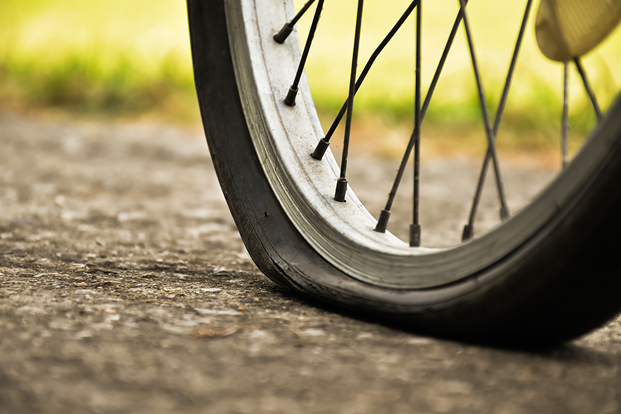
Now, a word on why bike tire pressure is so important. If the tire pressure is too low, the bike will not handle as responsively, and moreover, if the pressure is very low, it may cause accelerated wear to the tread, and on top of that, extremely low tire pressure can also incur damage to the bike wheel rim and even cause pinch flats.
Conversely, if the tire pressure is too high, you’ll feel every little bump in the road and your ride will be a whole lot less comfortable.
Another reason to keep your eye on your bike tire pressure is to catch inner tube leaks. If you notice your pressure consistently drops every few days, even if you’ve filled the tires a few times, you may need to replace your inner tubes.
Keeping an Eye on the Tread
In addition to monitoring the bike tire pressure, you should also keep your eye on the treads, as along with pressure, treads that are not too worn will provide you the proper traction, respective of the surface on which you’re riding.
As you inspect the bike tire treads, look for signs of excessive wear and damage. Cracking in the treads is also something to look for. As you scan the treads, be on the lookout for pieces of gravel, stones, or shells that get wedged in there and which can wear the tire or even create a puncture that will result in a flat.
Checking the tread is also a good time to check the sidewall, as the sidewall will often manifest damage more quickly than the treads. Look out for small cracks. If you see a lot of these in the sidewall, it’s time to replace your bike tires. This is a sign of deterioration that, though it can be caused by more than one factor, still needs to be addressed.
Also, be on the lookout for bulges in the sidewall that can indicate areas of concentrated stress. If you notice any of these you should also consider replacing your bike tires sooner rather than later.
One note here is that the rear tire of a bike will tend to wear out faster than the front tire, if only because the rider’s weight is mostly concentrated over the rear tire, and because the chain drive directly drives the rear wheel, which puts the rear tire under a lot of stress.
General Condition of the Tires
In addition to monitoring the treads and tire pressure, you should also pay attention to the general condition of the tires. As stated, one thing to look for is the presence of a lot of small cracks in the sidewall.
A browning of the sidewall can also indicate UV-related damage. While not necessarily cause for immediate concern, UV will damage bike tires if they are exposed to it for prolonged periods. Therefore it is advisable to keep your bike in the shade, or under cover, when you are not riding.
You should also keep your bike tires clean, not put them away caked with mud, sand, road grime and salt. Good practice is simply to rinse off the tires, or, if necessary, to wipe them down with a combination of warm water and a mild detergent. You can use a sponge or a microfiber rag for this.
You won’t always need to do that and in most instances, a simple rinse will get the job done. You just don’t want to put your bike away with a whole bunch of debris coated on the tires or trapped in the treads.
Here for Bike Tires? Shop Our Collection
Hopefully you found this guide to bike tire maintenance helpful and straightforward. At the same time, it is only intended to serve as a high level guide. If you have additional (or more specific) questions, feel free to reach out to us directly and we will help.
Otherwise, if you are here for bike tires or parts, shop our collection and let us know if you’re looking for something specific that you don’t see listed.